
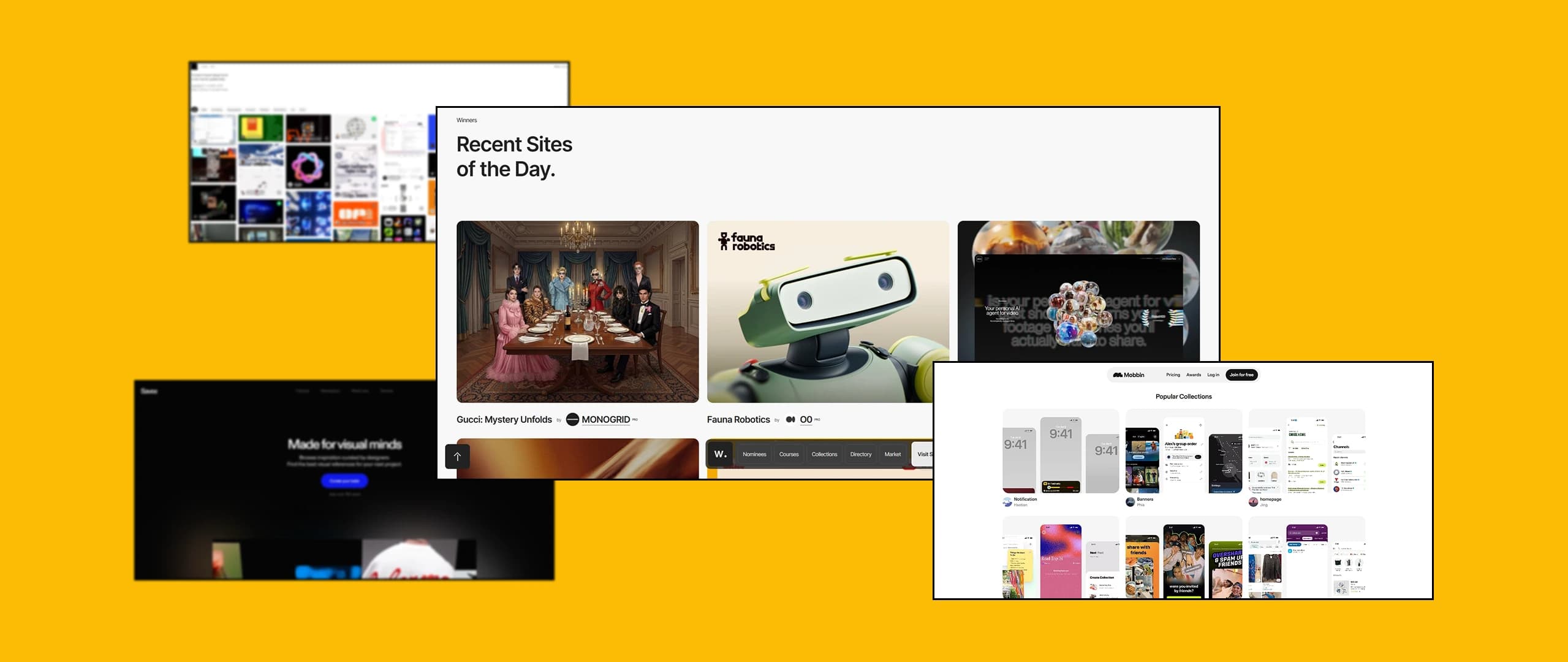
The problem with standard design feeds
When most people start in UI/UX, they go straight to Dribbble. While it's a great place to learn software, it's a terrible place to learn product design. The platform heavily rewards floating 3D elements, impossible soft shadows, and layouts that would completely break the moment real data or localized copy is injected into them.
When I design platforms or craft custom agency sites, I lean into an industrial, minimalist aesthetic. I need references that demonstrate brutal functionality, flawless typography, and real-world frontend execution. Here is where I actually look.
1. Awwwards & Godly (For execution & motion)
If you want to see the absolute bleeding edge of web development and WebGL interactions, Awwwards is still the undisputed king. It sets the industry standard for creative execution.
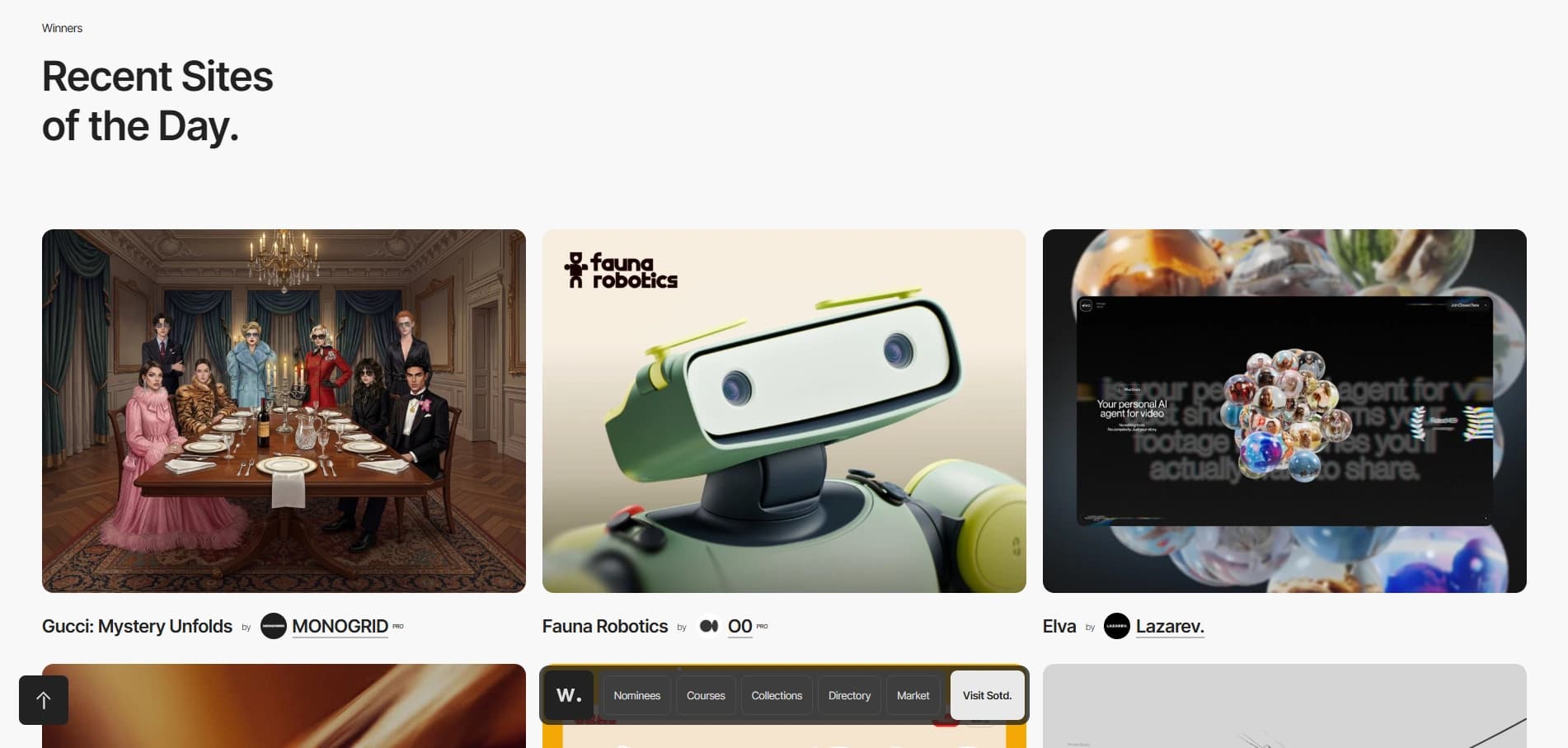
Awwwards
~ % execution --creative --bleeding-edge
However, Awwwards can sometimes be a bit too experimental. For a more focused curation specifically tailored to SaaS, clean Framer sites, and agency portfolios, I prefer Godly. It's incredibly useful for seeing how top-tier studios handle micro-interactions and scroll-jacking.
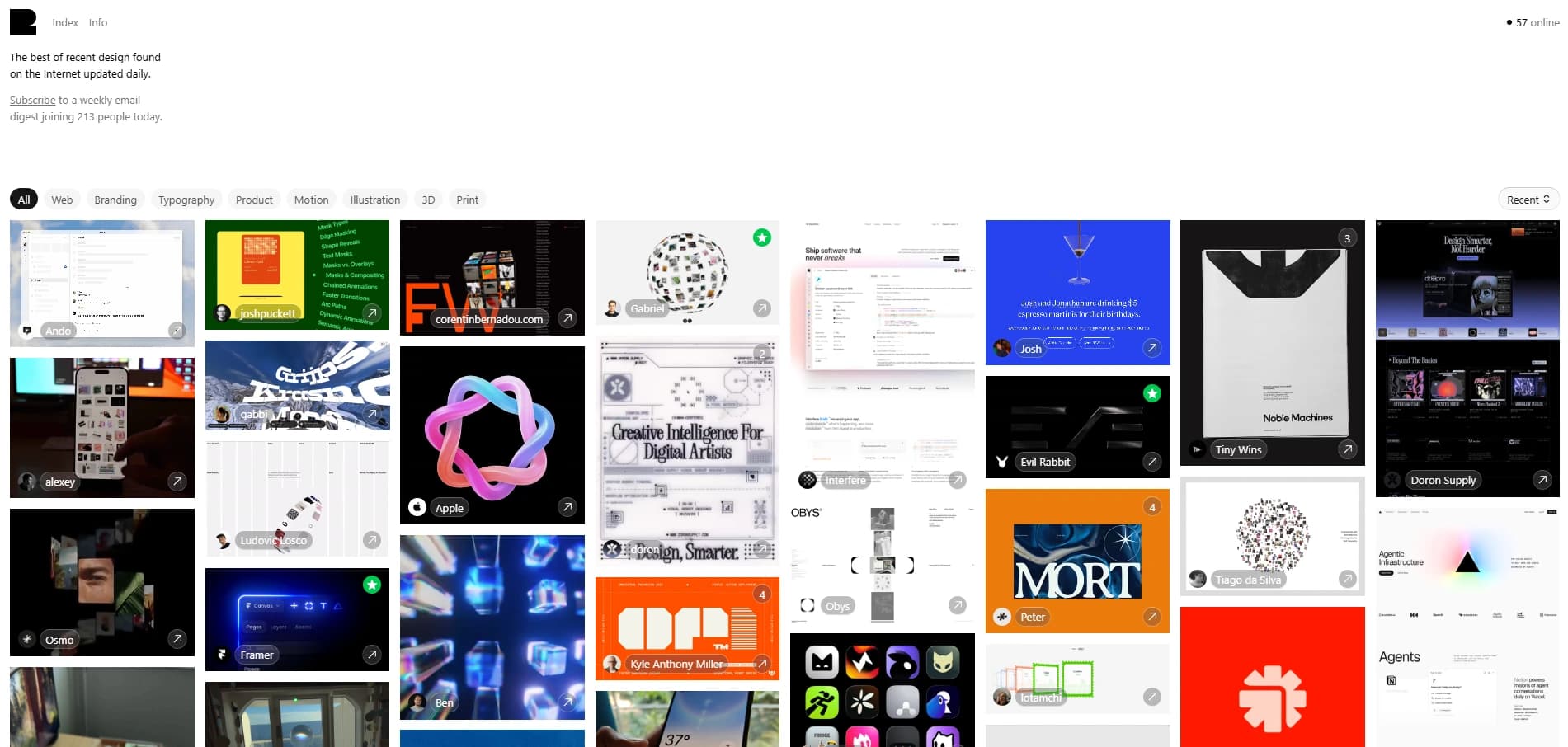
Godly.website
~ % fetch --saas --curated-agency
2. Savee.it (For mood and typography)
I rarely look at web design to get inspired for web design. If you only look at other websites, your work will always look derivative.
I use Savee.it specifically to hunt for print design, Swiss typography posters, and architectural photography. This is where I find the inspiration for strict editorial layouts, heavy typeface pairings, and whitespace rules.
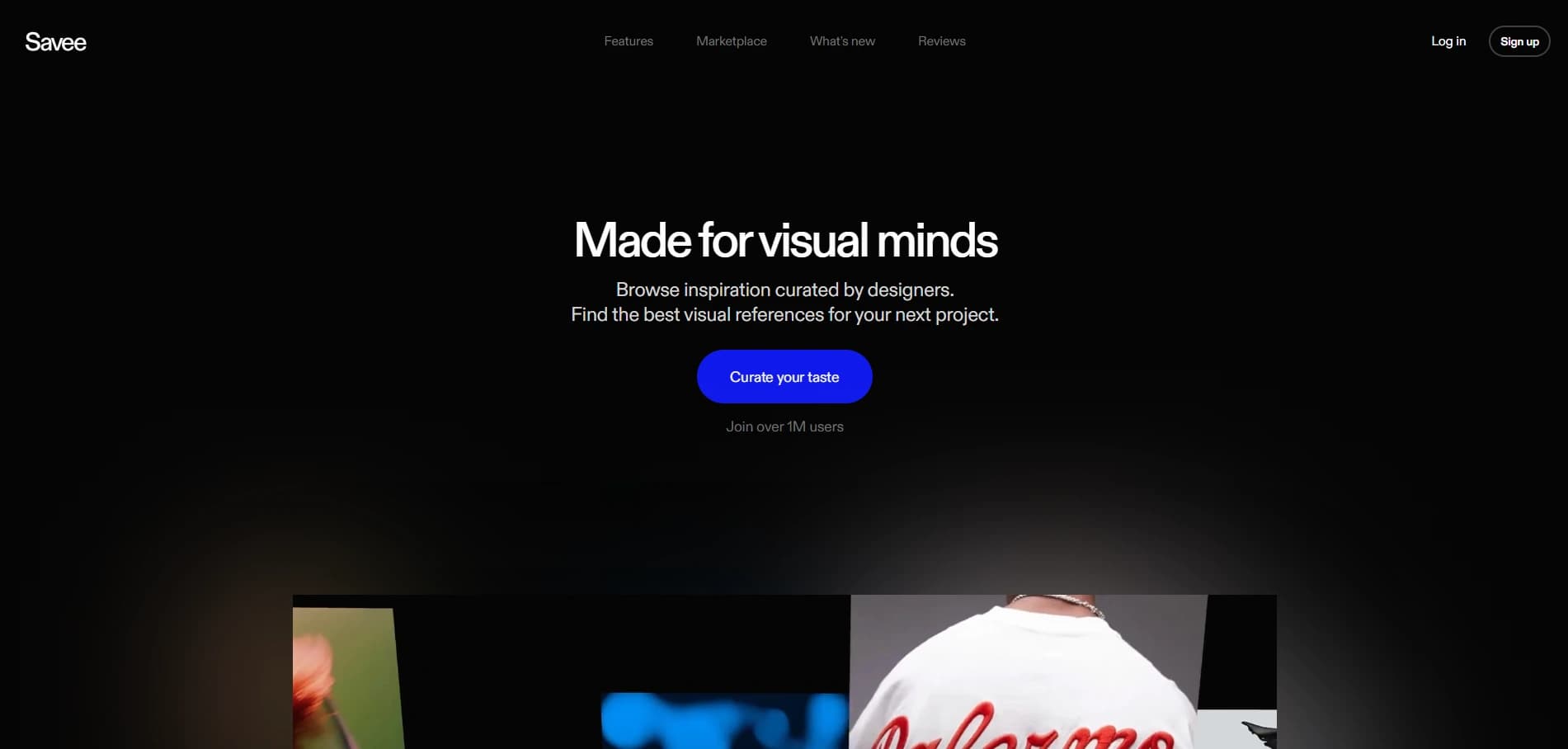
Savee
~ % index --typography --editorial
3. Mobbin (For actual UX patterns)
When I'm building a complex dashboard or an internal software tool, I don't need experimental animations. I need to know how standard users expect a multi-step onboarding flow or a data table filtering system to work.
Mobbin is a massive library of actual, real-world apps (iOS, Android, and Web). If I'm designing a checkout flow, I will study how Stripe or Airbnb handle their forms, error states, and hierarchies. It grounds my designs in reality.
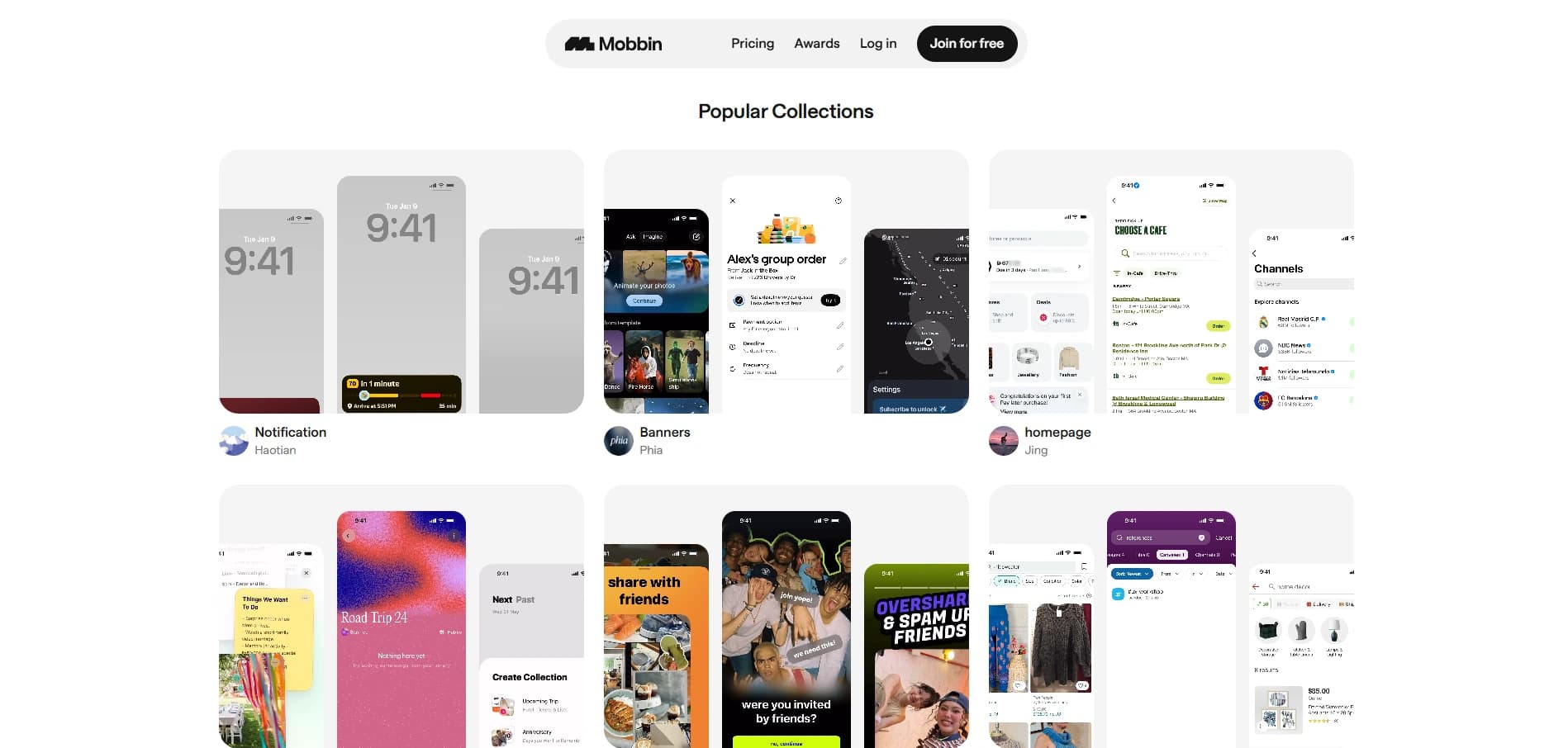
Mobbin
~ % analyze --ux-patterns --real-world
The short version
Build a library of references that actually serves the kind of work you want to create. Use Awwwards and Godly for technical execution, Savee for typography and spatial rhythm, and Mobbin for battle-tested UX patterns. Diversifying your inspiration is the fastest way to develop your own distinct visual language.

I design and build digital products from Sri Lanka, combining print-inspired aesthetics with modern frontend execution. If you want to talk about design systems or share some good reference sites, feel free to reach out.